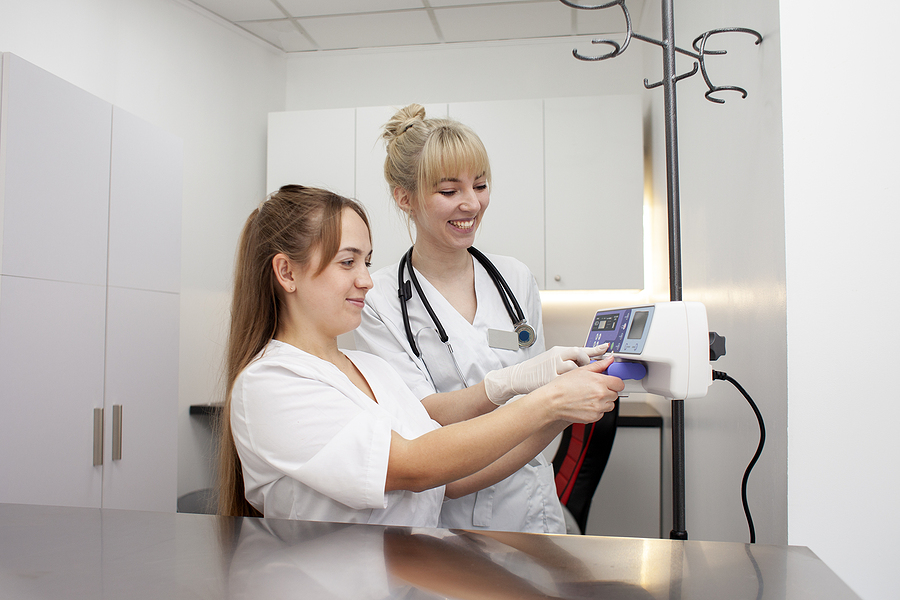
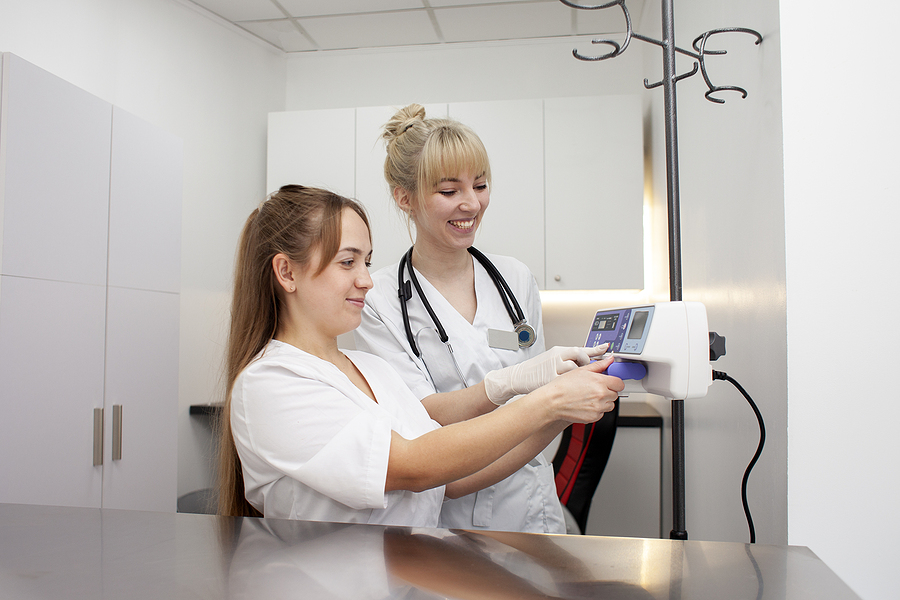
A medical assistant in Wisconsin handles the clinical and administrative work that keeps a clinic moving: rooming patients, taking vitals, drawing blood, updating electronic health records, and prepping exam rooms between visits. Entry typically requires a technical diploma or certificate, and most Wisconsin employers prefer candidates who sit for the CMA or CCMA exam within a year of hire.
The practical tension is timeline versus cost. A one-year technical diploma at a public college can run under $6,000, while a two-year associate degree at a private school pushes past $40,000, for roles that often start in the low-to-mid $40,000 range statewide.
Wisconsin's health systems, Aurora, Froedtert, Marshfield, and SSM, continue to hire steadily, a sign that medical assistants are in demand, and apprenticeship pathways are expanding through the state's technical college system.
Best Online Medical Assistant Programs in Wisconsin: 2026 Rankings
These five Wisconsin programs stand out for blending online-eligible formats with real clinical training and local healthcare connections. This list is not a cost or salary ranking; it highlights schools with stronger quality signals across student outcomes, affordability, and access.
Nicolet Area Technical College
#1Rhinelander, WI · ~$8,000/yr (est.)
Best for: Hybrid learners needing structured clinical labs
This technical college pairs online theory with in-person labs, creating a hybrid diploma option for students who need clinical skill-building close to home. The 32-credit medical assisting program carries CAAHEP accreditation and includes a 200-hour practicum. Federal data show an institution-wide graduation rate around 44 percent and a typical net price near $8,300, with median federal student debt across the college just under $7,900.
- CAAHEP-accredited hybrid diploma
- 32 total credit hours
- 200-hour clinical practicum
- 86% licensure pass rate
- $5,425 total program tuition
- Prepares for CMA (AAMA) certification
- 100% graduate and employer satisfaction rates
Milwaukee Career College
#2Milwaukee, WI · $27,000/yr
Best for: Career changers wanting local externships
This career college focuses on quick entry with a nine-month medical assistant certificate that begins with six weeks of online coursework before moving to in-person labs and a local externship. Enrollment data show a Pell-eligible student share around 79 percent, and the institution-wide graduation rate sits near 44 percent. The typical net price is about $27,000, with median federal debt for graduates across the college around $7,000.
- Nine-month certificate format
- First six weeks fully online
- In-person labs after online general education
- Clinical externship at a local healthcare facility
- Prepares for Certified Medical Assistant exam
- Day and evening class options
- Job placement assistance included
- Scholarships and financial aid available
Bryant & Stratton College-Wauwatosa
#3Wauwatosa, WI · $15,000/yr (net price)
Best for: Degree-focused learners wanting part-time options
This campus offers an associate degree route for students who want a longer credential and transferable credits. The 62-credit medical assisting program is CAAHEP accredited and includes an internship, but the campus-wide graduation rate is much lower at about 20 percent. The typical net price is around $14,900, and median federal debt after graduation is about $21,500; program-level earnings are not yet published.
- 62 total credit hours
- Under two years for full-time study
- Prepares for CMA, CCMA, or RMA exams
- CAAHEP accredited
- Includes an internship experience
- Full-time and part-time study options
- No application fee
University of Wisconsin-La Crosse
#4La Crosse, WI · $15,000 – $20,000/yr
This public university delivers a fully online clinical medical assistant certificate that may fit working adults or jobseekers who qualify for WIOA funding. The program reports no prerequisites and rolling start dates. Federal data show a strong institution-wide graduation rate near 71 percent and median earnings after attendance above $60,000, though that figure reflects all university students, not certificate completers alone; program-level earnings and debt are not yet published for this short certificate.
- Fully online certificate program
- Rolling admissions and start dates
- Prepares for NHA CCMA exam
- No prerequisites required
- Eligible for WIOA funding
- Covers EKG, phlebotomy, and EHR skills
- Adds CEHRS credential preparation
- Hands-on EHR software experience
- CPR certification opportunity
- Unpaid clinical experience component
University of Wisconsin-Whitewater
#5Whitewater, WI · $10,000 – $15,000/yr
This public university offers a self-paced, fully online clinical medical assistant certificate with rolling admissions and no prerequisites. Federal data show an institution-wide graduation rate around 59 percent and median earnings after attendance near $55,400, but program-level earnings for the certificate are not yet published. The typical net price is about $14,200, while median federal debt after graduation is roughly $23,200 across all university students.
- Fully online self-paced format
- Prepares for NHA CCMA exam
- Rolling admissions with no prerequisites
- Covers injections, EKG, phlebotomy, and coding
- Projected 16% medical assistant job growth
Compare Costs, Length, and Formats at a Glance
Published costs vary because some colleges report tuition and fees only, while others bundle books and supplies into an estimated total. A Wisconsin medical assistant technical diploma often takes about 12 months, but several programs do not list a fixed timeline online. Use this comparison as a starting point and confirm current details with each campus.
| Program | Tuition & Fees | Length (Months) | Format | Accreditation |
|---|---|---|---|---|
| Fox Valley Technical College, Medical Assistant Technical Diploma | $5,423.23 tuition and fees; $7,155.46 estimated total with books and supplies | Not specified | On-campus, Appleton or Oshkosh, full-time or part-time | Not specified |
| Northcentral Technical College, Medical Assistant Technical Diploma | $6,001 approximate total for tuition, fees, books, and supplies | 12 | On-campus | CAAHEP-accredited |
| Madison Area Technical College, Medical Assistant Technical Diploma | $5,661.85 estimated total cost | 12 | Not specified | CAAHEP-accredited |
| Milwaukee Area Technical College, Medical Assistant Diploma | Institution-wide: $4,586 in-state tuition plus $692 full-time student fees; program-specific cost not listed | Not specified | On-campus | CAAHEP-accredited |
| Northeast Wisconsin Technical College, Medical Assistant Technical Diploma | $168.85 per credit for Wisconsin residents; institution-wide full-time resident around $4,818 per year | Not specified | Campus-based | Not specified |
How We Ranked These Programs
Choosing an accredited medical assistant program is a big decision, and we want you to feel confident that our rankings reflect real outcomes, not just marketing claims. Here is a look at how we built our list and where the data comes from.
Data We Used
Our rankings draw on the U.S. Department of Education's College Scorecard, which publishes program-level information reported by colleges and universities. The key factors we considered include:
- Program completions: How many students actually finish the medical assistant program each year, which signals both demand and institutional support.
- Median earnings after completion: What graduates typically earn after entering the workforce, which reflects how much do medical assistants make, giving you a real-world sense of return on investment.
- Median student debt: How much borrowing students take on, so you can weigh affordability alongside quality.
- Graduation rate: The share of students who complete their studies at the institution overall.
How We Weighted the Factors
Rather than relying on a single metric, we used a composite scoring approach that balances quality and affordability. Programs where graduates earn more and borrow less score higher. Strong completion numbers also boost a program's standing, because a school that consistently graduates students is doing something right. We then applied a modest boost to programs offered in an online or hybrid format, which includes online medical assistant programs, since flexible scheduling matters to many aspiring medical assistants who are juggling work or family responsibilities.
What the Data Cannot Tell You
No ranking is perfect, and transparency matters. A few limitations worth knowing:
- Graduation rates reflect the entire institution, not just the medical assistant program. A large university's overall rate may look different from what you would see in a focused health sciences cohort.
- Net price figures are institution-wide averages. Your actual cost will depend on your financial aid package, residency status, and course load.
- Scorecard data is published on a lag, so the figures in our rankings come from the most recent reporting year available rather than real-time numbers.
We believe this approach gives you a trustworthy starting point. Still, we always encourage you to contact admissions offices directly, ask about clinical placement support, and visit campuses (or attend virtual open houses) before making your final choice. Rankings open the door, but your own research seals the deal.
Related Articles
Online vs On-Campus Medical Assistant Programs in Wisconsin
More Wisconsin students are choosing online didactic coursework this year, but the clinical side of training still ties nearly every program back to a physical setting somewhere in the state.
What "Online" Actually Means Here
No Wisconsin medical assistant program is fully virtual. Online and hybrid formats let you complete anatomy, medical terminology, insurance billing, and pharmacology coursework on your own schedule, which is a real advantage if you're working full time or managing family obligations. But every legitimate program, including the online options in our rankings, still requires an in-person clinical medical assistant externship, typically 160 to 200 hours, at a partnering clinic, hospital, or physician's office near you. Some hybrid programs also require periodic on-campus labs for skills like phlebotomy, vitals, and injections before you're cleared for the externship.
WTCS technical colleges (Milwaukee Area Technical College, Madison College, and others) tend to run traditional on-campus diploma tracks with set cohort schedules, while several accredited career schools offer online medical assistant certificate and diploma programs with the online-lecture, in-person-lab model. Both paths lead to the same eligibility for CMA or RMA medical assistant certification exams, so format alone shouldn't decide your choice.
Cost Isn't Always Lower Online
A common assumption is that online programs cost less because there's no campus overhead. In Wisconsin, that's not consistently true. Some online-format programs carry similar or higher net tuition than WTCS on-campus diplomas once fees, lab kits, and externship placement costs are factored in. Compare total program cost, not just the sticker price of tuition, before assuming online is the budget-friendly route.
Before You Enroll
Call a few local clinics or hospital HR departments and ask whether they've hired graduates from the online program you're considering. Wisconsin employers care most about whether your clinical hours were substantial and supervised, not whether your lectures happened on a laptop or in a classroom.
Medical Assistant Certification in Wisconsin: CMA, RMA, and Employer Preferences
Wisconsin does not require medical assistants to hold a state license, but in practice, medical assistant certification is the credential that moves your application forward at most health systems. The employers below do not appear to rank one national credential above another. Instead, they list several acceptable options, and your job is to hold at least one of them.
Certification options compared
The three credentials you will see most often in Wisconsin job postings are the CMA, RMA, and NCMA credentials: CMA (AAMA) from the American Association of Medical Assistants, RMA (AMT) from American Medical Technologists, and NCMA (NCCT) from the National Center for Competency Testing. Graduates of CAAHEP- or ABHES-accredited programs7 are eligible to sit for the CMA (AAMA) exam, which makes accreditation the most direct route if that is the credential you want. RMA and NCMA exams have separate eligibility pathways, and Wisconsin employers commonly accept them alongside the CMA.
What major Wisconsin employers accept
- UW Health: Accepts CMA, RMA, and CCMA.1 Its 10-month Medical Assistant Apprenticeship Program leads to CCMA.2
- Aurora Health Care: Accepts CMA, CCMA, RMA, NCMA, and CMAC.3 Two years of verifiable full-time MA experience within the last five years may substitute for education.4 BLS is required within 45 days unless waived.3
- Marshfield Clinic Health System: Accepts CMA, RMA, and NCCT. BLS is required within three months.5
- Mercyhealth: Accepts CMA, RMA, CCMA, and NCMA.
Mayo Clinic Wisconsin's public posting reviewed here did not spell out accepted credentials, so confirm directly with the hiring or HR team if you are targeting that system.
Verify before enrolling
Most postings do not state a preference for online versus on-campus training. The requirements that matter are exam eligibility and CPR certification, usually BLS. Before you enroll, ask whether the program's graduates qualify for a credential that your target employers accept. If an apprenticeship appeals to you, remember that UW Health's program awards CCMA, not CMA or RMA, and check whether that fits your long-term plans.
What Do Medical Assistants Earn in Wisconsin?
Medical assistant pay in Wisconsin sits slightly above the national median. The figures below reflect the May 2025 BLS Occupational Employment and Wage Statistics release; Madison and rural Wisconsin medians are not separately reported in the available tables. Program-level earnings for online and hybrid medical assistant programs remain limited in federal data, so these statewide and metro figures are the clearest current benchmark.

Career Pathways and Apprenticeship Options in Wisconsin
Two Routes Into the Field
Wisconsin offers two main entry paths for How to Become a Medical Assistant: a one-year technical diploma or an apprenticeship. Technical diplomas at Wisconsin technical colleges usually take 10 to 12 months and run about 28 to 33 credits.12 Published costs at Madison College and Northwood Technical College sit roughly between $5,662 and $6,78612, and most programs include an unpaid clinical practicum, such as Northwood's 160-hour requirement.2 Apprenticeships can lower that upfront cost because you earn wages while you train instead of paying full tuition first.
How a Registered Apprenticeship Works
The Wisconsin Department of Workforce Development administers a Medical Assistant Registered Apprenticeship, but there is no single statewide program sheet. Requirements, wages, and sponsor details vary by employer and region, so you apply directly to a sponsor. The Wisconsin Technical College System framework for the Medical Assistant Apprenticeship calls for no less than 2,306 total hours: about 2,000 hours of paid on-the-job training plus 306 hours of paid related classroom instruction. One example is the Medical Assistant Student Apprenticeship at SSM Health, an 18-month full-time apprenticeship with Madison College and DWD, open to current employees and external applicants. Eligibility can include a high school diploma, residency in the South Central Wisconsin workforce area, reliable transportation, and agreement to DWD terms. Completers must earn a C or better in courses, meet performance ratings, and pass the CMA exam.
Shorter and Employer-Linked Options
A one-year youth apprenticeship in Medical Assistant can bridge into a registered apprenticeship.3 WPHCA runs a 12-month in-house apprenticeship preparing for the CCMA, though it is not DWD-registered.4 MAAPET, involving employers such as Children's Wisconsin, Froedtert, Aurora, and Ascension, is another accelerated employment-linked pathway.5 Not every "earn while you learn" program is a formal DWD-registered apprenticeship, so ask the sponsor how it is structured.
Where It Can Lead
After working as a medical assistant, many people continue into LPN programs or Medical Assistant to RN Programs at Wisconsin technical colleges. Bridge credit policies vary by school, so ask admissions about prior MA coursework and experience. Choosing an apprenticeship can reduce debt and give you a paid foot in the door before you decide whether to advance.
How to Pay for Medical Assistant Training: Financial Aid and Employer-Sponsored Options
Many Wisconsin students reduce out-of-pocket costs by layering federal aid, state grants, school scholarships, and employer tuition assistance. Start with the FAFSA to see whether you qualify for federal Pell Grants, work-study, or loans, then ask your program's financial aid office about options listed below.
State and Local Funding Sources
- Wisconsin Grant: This is need-based state grant aid for eligible residents.1 Coverage and part-time eligibility vary by school and program, so confirm with your financial aid office.
- Technical Excellence Scholarship: For students attending Wisconsin Technical College System schools, this may cover up to $2,250 per year.2 The nomination window for 2026 opened in February and closed March 13, 2026; check with your college about future cycles.
- WIOA/DVR assistance: Workforce Innovation and Opportunity Act funding through Wisconsin's Division of Vocational Rehabilitation can provide up to $6,000 per year toward approved training in 2026 to 2027,3 though not all programs automatically qualify.
School-Specific Scholarships
Northcentral Technical College foundation awards require acceptance into a program and at least 6 credits per semester.4 Northeast Wisconsin Technical College offers a Medical Assistant Faculty Scholarship of up to $2,000 for students in their final semester, based on merit and need.5 These are examples, so ask each campus what medical assistant-specific aid is available.
Employer-Sponsored and Apprenticeship Options
The most direct tuition-free route is MAAPET, Wisconsin's Medical Assistant Apprenticeship Program Employer Training. It combines paid, on-the-job training with classroom work at no tuition cost.6 Participating employers include Children's Wisconsin, Froedtert Health, Aurora Health, and Ascension Wisconsin.6 Eligibility requires being unemployed or underemployed and passing the TABE exam.7 The next cohort begins September 28, 2026.8 Because the application does not guarantee a spot, apply early and prepare for testing and interviews. Outside MAAPET, when you apply to medical assistant job openings, ask human resources at nearby hospitals and clinics about internal tuition reimbursement, since policies vary by employer. Apprenticeships like MAAPET can dramatically lower costs because employers cover training while you earn a paycheck.
Frequently Asked Questions About Wisconsin MA Programs
Wisconsin does not require a state license or certification to work as a medical assistant, but employer expectations and program choices still shape your career path. Below are the questions prospective students ask most often.
What Is the Best Medical Assistant Program in Wisconsin?
The answer depends on your goals, schedule, and budget. Our 2026 rankings section above evaluates accredited programs across the state using factors like CAAHEP or ABHES accreditation, completion rates, and graduate outcomes. If national certification is important to you (and it should be), start with programs that carry one of those accreditations, since they qualify you to sit for the CMA or RMA exam immediately after graduation.
How Long Does It Take to Become a Medical Assistant in Wisconsin?
Most technical diploma programs run 9 to 12 months of full-time study. If you choose an associate degree program, expect about two years. Some accelerated or online-hybrid formats compress the timeline further, but clinical externship hours remain a fixed requirement regardless of format. Part-time students should plan for a longer completion window.
How Much Does Medical Assistant Training Cost in Wisconsin?
Tuition at Wisconsin Technical College System schools is generally among the most affordable in the country. Depending on the institution and credential level, total program costs typically range from roughly $5,000 to $15,000 for in-district students pursuing a technical diploma. Associate degree programs fall at the higher end, so consider whether a medical assistant associate's degree is worth it. Check the cost comparison table earlier in this article for school-by-school figures, and remember that fees, books, and supplies add to the sticker price.
Are There Online Medical Assistant Programs in Wisconsin?
Yes. Several Wisconsin colleges offer hybrid programs that deliver lectures and coursework online while requiring in-person labs and clinical rotations at approved sites. Fully online programs from nationally accredited schools are another option, though you will still need to complete hands-on clinical hours at a local healthcare facility. Our ranking section flags which programs offer an online or hybrid format.
Do You Need Certification to Work as a Medical Assistant in Wisconsin?
No state mandate exists, but most employers in Wisconsin prefer or require candidates who hold the CMA (through AAMA) or RMA (through AMT). Earning a credential signals competency and often translates into higher starting pay. The certification section above breaks down each option in detail.
What Is the Average Salary for a Medical Assistant in Wisconsin?
According to the Bureau of Labor Statistics, medical assistants in Wisconsin earn a median annual wage in the low-to-mid $40,000 range. Salaries vary by region, employer type, and whether you hold a national credential. Urban healthcare systems and specialty clinics tend to offer the highest compensation. See the earnings infographic earlier in this article for a more detailed breakdown.
State by State
- Alabama
- Alaska
- Arizona
- Arkansas
- California
- Colorado
- Connecticut
- Delaware
- Florida
- Georgia
- Hawaii
- Idaho
- Illinois
- Indiana
- Iowa
- Kansas
- Kentucky
- Louisiana
- Maine
- Maryland
- Massachusetts
- Michigan
- Minnesota
- Mississippi
- Missouri
- Montana
- Nebraska
- Nevada
- New Hampshire
- New Jersey
- New Mexico
- New York
- North Carolina
- North Dakota
- Ohio
- Oklahoma
- Oregon
- Pennsylvania
- Rhode Island
- South Carolina
- South Dakota
- Tennessee
- Texas
- Utah
- Vermont
- Virginia
- Washington
- Washington DC
- West Virginia
- Wyoming