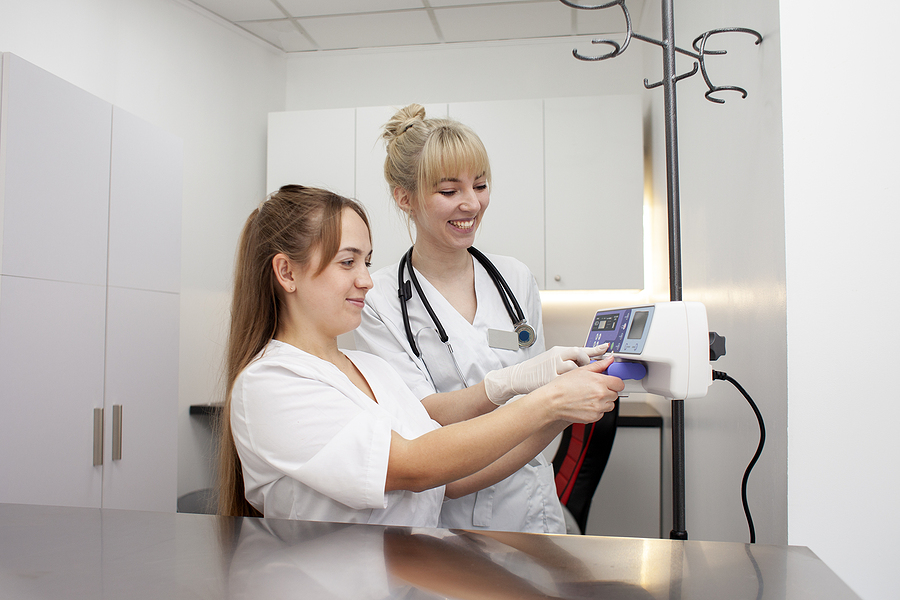
Neurology clinics are adding medical assistants faster than many general practices, driven by rising demand for migraine and cognitive care. The BLS still counts these workers in the broader medical assistant category, which reported a national median annual wage near $42,000 in 2024.
A neurology MA may set up an EEG, perform a Montreal Cognitive Assessment, then shift to insurance prior authorizations and patient education. That mix keeps the role from becoming purely clerical or clinical.
Neurology MAs can advance into lead MA or EEG technician roles, but most demand sits in outpatient clinics that expect one person to cover front and back office.
What Does a Neurology Medical Assistant Do on a Daily Basis?
Neurology medical assistants juggle a distinctive blend of clinical, procedural, and administrative tasks that sets their workday apart from general practice roles.
Patient Intake and History-Taking
Every patient encounter begins at intake, but in a neurology clinic the focus sharpens quickly.1 Rather than collecting a broad health history, you zero in on neurological symptoms: headache patterns, seizure frequency, tremor onset, numbness, gait changes, and medication side effects. Medication reconciliation is especially important because many neurology patients take multiple prescriptions for conditions like migraine, epilepsy, Parkinson disease, or multiple sclerosis. Accurately documenting current dosages, missed doses, and recent changes helps the neurologist make safer treatment decisions.
Clinical Tasks at the Chair and Exam Table
Vital signs are standard, but neurology adds its own layer. For patients with conditions like Parkinson disease, you may be asked to perform orthostatic blood pressure checks, measuring readings in different positions to catch drops that affect balance and fall risk. You also assist the neurologist during hands-on exams, applying clinical medical assistant skills as you help position patients for cranial nerve assessments, strength and reflex testing, and coordination checks. When point-of-care lab tests are ordered and fall within waived test categories, you may run those as well. If the provider needs real-time documentation, you may serve as a scribe, entering findings directly into the electronic health record during the visit.
Administrative Coordination
Behind every patient visit is a layer of scheduling, referral coordination, and insurance work that draws on the administrative medical assistant side of the role. You may route referrals to imaging centers or other specialists, initiate prior authorizations for medications or procedures according to clinic protocols, and confirm upcoming appointments. Accurate EHR documentation ties all of it together, ensuring continuity between visits.
The Mix of Routine and High-Acuity
One appointment might be a straightforward migraine follow-up.2 The next could involve a newly diagnosed multiple sclerosis patient who needs extensive education and urgent referrals. That swing between routine check-ins and complex, high-acuity encounters keeps the work engaging and demands both clinical readiness and strong organizational skills throughout the day.
Neurology Medical Assistant Vs. General Medical Assistant: Key Differences
Neurology medical assistants and general medical assistants share many core clinical and administrative skills, but the specialty role adds a neurology-specific focus while general MAs are often expected to float across departments. Salary differences are modest based on available data, and daily tasks can vary more by employer than by title.
| Aspect | Neurology Medical Assistant | General Medical Assistant |
|---|---|---|
| Reported national annual wage | $41,370 per year (2025 data) | $42,000 per year (2025 data) |
| Lower-end annual wage in reported distribution | $35,500 per year (2025 data) | $33,500 per year (2024 data) |
| Typical hourly pay | $19.89 per hour nationally; some neurology job postings list $20 to $25 per hour | About $20.19 per hour calculated from the national annual wage across 2,080 full-time hours |
| Daily duties | Includes front office tasks (scheduling, check-in, billing, authorizations, payment processing, supply management) and back office tasks (ECGs, venipuncture, specimen processing, TB skin tests, vaccines, EMR charting) | Requires knowledge of medical terminology, procedures, universal precautions, body mechanics, and EMR software; may also float to other departments beyond neurology |
| Work setting and flexibility | Focused on neurology clinics and specialty practices, as shown in postings from Beth Israel Lahey Health, UC San Diego Health, and Neurology Texas | Often works across multiple clinical departments and may be expected to float wherever needed |
How to Become a Neurology Medical Assistant: Education and Certification Steps
Becoming a neurology medical assistant means combining standard MA training with extra effort to build familiarity with the nervous system, since no separate "neurology MA" degree exists. Instead, you build a general MA foundation and then layer on neuro-specific exposure through your clinical placement and early job experience.
The Basic Education Path
Most people start with a high school diploma or GED, then complete a postsecondary medical assistant certificate (about 9 to 12 months) or a medical assistant associate degree (roughly two years). Either route should include a supervised clinical externship, which is often your best chance to request a placement in a neurology practice, stroke clinic, or hospital neuroscience unit if your school has those partnerships.
Choosing a Certification
Employers, including large hospital-based neurology departments, generally want to see a recognized national credential, though smaller practices sometimes hire uncertified assistants under physician delegation1. Three credentials dominate the field:
- CMA (AAMA): Requires graduating from a CAAHEP or ABHES accredited program. There is no experience-only pathway, which is part of why it's often viewed as the field's gold standard.
- RMA (AMT): Accepts either accredited program graduates2 or candidates with substantial hands-on experience, generally around five years of supervised MA work within a seven-year window.1
- CCMA (NHA): The most flexible option, open to high school graduates who complete a training program or accumulate roughly a year of supervised work within the past three years.3
Any of these can open doors, but if you're weighing options, consider how much clinical experience you already have versus how much structured schooling you plan to complete.
Gaining Neurology-Specific Exposure
Because formal neurology MA programs are rare, most specialization in medical assisting happens on the job. Ask your externship coordinator about neurology rotations, and once hired, volunteer for EEG or EMG shadowing, stroke protocol training, or cognitive assessment support. This kind of on-the-job learning often matters more to neurology employers than a credential alone.
Additional Requirements
BLS certification isn't required by any certifying body, but employers, especially in hospital-based neurology settings, commonly expect it. Also check your state's rules: a handful of states, including South Carolina, legally define who may call themselves a certified medical assistant, requiring both approved training and a board-recognized credential, with transition deadlines for incumbents already working in the field.4
Related Articles
Where Neurology Medical Assistants Work: Settings, Daily Workflow, and Common Conditions
Where will you actually spend your days as a neurology medical assistant, and how does the pace differ between a quiet clinic and a bustling hospital unit?
Most neurology MAs work in outpatient neurology clinics, the most common setting for this specialty.1 However, you may also find positions in hospital-based neurology or stroke units, as well as neurology departments within academic medical centers.1 Each environment shapes the evolving role of medical assistants through distinct daily tasks, patient interactions, and workloads.
Outpatient Neurology Clinics
In an outpatient clinic, your day follows a predictable rhythm built around scheduled appointments. A typical shift might look like this:
- 7:30 to 8:00 a.m.: Arrive and prepare patient charts for the day's visits, reviewing histories and flagging updates.2
- 8:00 a.m. to noon: Room patients, measure vital signs, and document chief complaints.3 You may assist with procedures or handle prior authorizations for specialty medications.
- Noon to 1:00 p.m.: Lunch break, often overlapping with chart updates or phone calls.
- 1:00 to 5:00 p.m.: Continue patient rooming, respond to patient portal messages, coordinate referrals, and schedule follow-up visits.
Patient interactions here tend to be longer and focus on chronic condition management for diagnoses like migraine, epilepsy, Parkinson's disease, multiple sclerosis, stroke follow-up, and cognitive disorders.1
Hospital Neurology Units
Hospital-based roles move faster and center on bedside care. You perform frequent vital sign checks4, assist with monitoring, and help coordinate discharges. Patient interactions are brief but happen often throughout a shift5, and you may support procedures or respond to urgent situations.
Academic Medical Centers
Academic neurology departments combine outpatient scheduling with added complexity. You coordinate care across subspecialty clinics (epilepsy, movement disorders, MS) and work alongside residents and fellows.6 Multidisciplinary teamwork and research-related documentation add layers to your responsibilities, making patient cases more intricate but also more educational.
Neurology Medical Assistant Salary: National, State, and Metro Outlook
Neurology-specific medical assistant pay tends to track slightly above general medical assistant wages, though no single source publishes a complete national distribution. State and metro data are not broken out separately for neurology roles, so the table below focuses on national neurology figures alongside general medical assistant benchmarks. For general medical assistants, top-paying states include Washington ($25.86/hr), Alaska ($25.25/hr), California ($24.47/hr), District of Columbia ($24.09/hr), and Minnesota ($23.91/hr), but neurology premiums in those areas may vary.
| Role / Source | Mean Hourly | Mean Annual | 25th Percentile Annual | 75th Percentile Annual |
|---|---|---|---|---|
| Neurology Medical Assistant (National, 2025) | $19.89 | $41,370 | $35,500 | $45,500 |
| Medical Assistant Neurosurgery (National, 2026) | $22.00 | $45,083 | $40,661 | $49,292 |
| Medical Assistants (All Specialties, BLS OEWS) | N/A | $44,720 | $37,610 | $48,160 |
Top-Paying Metro Areas for Medical Assistants
The following metro areas reported the highest median annual wages for medical assistants in 2024, according to the U.S. Bureau of Labor Statistics. Wages can vary significantly by local cost of living and demand, and specialized neurology practices in these regions may pay above the metro-wide median.
| Metro Area | Median Annual Wage (2024) |
|---|---|
| San Francisco-Oakland-Fremont, CA | $59,910 |
| Seattle-Tacoma-Bellevue, WA | $58,850 |
| Boston-Cambridge-Newton, MA-NH | $49,150 |
| New York-Newark-Jersey City, NY-NJ | $46,890 |
| Washington-Arlington-Alexandria, DC-VA-MD-WV | $46,760 |
| Chicago-Naperville-Elgin, IL-IN | $46,740 |
| Phoenix-Mesa-Chandler, AZ | $46,090 |
| Los Angeles-Long Beach-Anaheim, CA | $46,000 |
| Philadelphia-Camden-Wilmington, PA-NJ-DE-MD | $45,830 |
| Atlanta-Sandy Springs-Roswell, GA | $45,040 |
Neurology Medical Assistant Skills and Procedures: EEG, EMG, and Beyond
Working in a neurology practice means hands-on involvement with diagnostic procedures and treatments you rarely encounter in a general medical office. Here is a closer look at the core clinical skills neurology medical assistants develop on the job.
EEG Setup and Monitoring
Electroencephalography (EEG) records electrical activity in the brain, and your role centers on getting the patient ready. That includes measuring the head according to the 10-20 electrode placement system, cleaning and lightly abrading the scalp at each site, and helping the neurodiagnostic technologist apply electrodes accurately.1 You may also explain what to expect so the patient stays calm and still. The technologist handles the actual recording and any technical interpretation; your preparation work directly affects signal quality.
EMG and Nerve Conduction Study Assistance
For electromyography (EMG) and nerve conduction studies, you prepare the exam room and the patient. Responsibilities typically include explaining the procedure, positioning the patient comfortably, prepping the skin at test sites, and handing supplies to the physician or technologist performing the study.2 You do not operate the recording equipment or interpret results, but thorough preparation helps the study run smoothly.
Lumbar Puncture Support
When a provider performs a lumbar puncture, you assist with setup and sterile field maintenance. You help position the patient (usually in a lateral decubitus or seated position), hand sterile instruments as needed, and monitor vital signs throughout. After the procedure, you check for headache, pain, or any new neurologic complaints. You also label cerebrospinal fluid (CSF) tubes carefully and arrange prompt transport to the lab.1
Infusion Therapy and Injection Support
Many neurological conditions require ongoing infusion or injection therapy. You coordinate appointments, manage prior authorizations with insurance, take pre-infusion vitals, and educate patients on what to expect.3 Depending on state law and clinic policy, you may administer subcutaneous or intramuscular injections, including disease-modifying therapies or neurotoxin injections like Botox. Preparing sterile trays for these procedures is a routine part of the workflow.4
Cognitive Screening and Additional Skills
Neurology MAs often assist with cognitive screenings using clinic-approved tools under provider supervision.2 Beyond diagnostics, you apply seizure precautions, perform fall risk assessments, and educate patients on managing conditions like epilepsy, multiple sclerosis, or migraines. You may also assist with skin biopsies, run point-of-care tests, and maintain quality logs.3 Each of these skills builds a specialized toolkit that sets neurology medical assistants apart.
Neurology Medical Assistant Career Path and Growth Opportunities
The real question for most neurology MAs is whether to build depth in your current role or invest years in more schooling for a bigger paycheck later. Both paths pay off, but they demand different tradeoffs of time, tuition, and tolerance for classroom work.
Lead Medical Assistant: The Internal Promotion Path
This is the shortest jump. Most neurology practices promote from within after 3 to 5 years of strong clinical performance4, and specialty experience often gives you an edge over general MAs. You'll typically need to hold (or earn) a CMA or RMA credential, though no additional degree is required.
National averages for medical assistant salary hover around $19.89/hour, with typical ranges between $17 and $22/hour. Some metros pay considerably more: Philadelphia reports near $66,600/year.1 Salary sources disagree sharply here, so treat local job postings as your best benchmark.
Neurodiagnostic Technologist: The Natural Specialty Leap
If you already assist with EEGs and nerve studies, this is the highest-leverage move. You'll need either an accredited 1 to 2 year neurodiagnostic program or documented on-the-job experience, followed by ABRET credentials: R. EEG T., R. EP T., or CNIM. Expect 2 to 4 years total to reach registry eligibility.
Pay scales meaningfully with credentials: - Entry tech roles: roughly $28 to $42/hour.2 - BLS median (health technologists, all other): $50,290/year. - CNIM (intraoperative neuromonitoring): $90,000 to $130,000/year, with contract roles sometimes higher
Your existing familiarity with neuro terminology, electrode placement, and patient prep meaningfully shortens the learning curve.
Registered Nurse: The Longer, Broader Route
Becoming an RN requires an accredited associate degree registered nurse (ADN) or BSN (about 4 years, or 12 to 18 months via accelerated second-degree programs), plus passing the NCLEX-RN. Timeline from medical assistant to RN typically runs 2 to 6 years depending on prerequisites. Many hospitals prefer BSN. Your charting, patient assessment, and neuro exam experience transfer directly.
Physician Assistant: The Highest Ceiling
PA school requires a bachelor's degree with science prerequisites, direct patient care hours (where your MA time counts), and a competitive Master of Physician Assistant Studies program (typically 27 months). Plan on 5 to 8 years total from where you stand now. It's the longest road, but neurology PAs are in strong demand and command salaries well above the other paths on this list.
Job Outlook: Growth Projections for Medical Assistants in Neurology
What is the actual job outlook for a medical assistant who wants to specialize in neurology, and how does the national growth trend translate into this field?
The Bureau of Labor Statistics projects that medical assistants are in demand nationally, with jobs growing about 12 percent between 2024 and 2034, much faster than the 3.1 percent average across all occupations. Total employment is expected to rise from roughly 811,000 to 912,200, adding about 101,200 net new positions. On top of that, around 112,300 openings are expected each year when replacements for workers who leave or retire are included. This is the current official outlook, not older figures sometimes cited from earlier years.
Why neurology demand is likely to follow
BLS does not break out employment projections by medical specialty, so there is no published neurology-specific growth rate. Still, the forces behind the overall increase are especially relevant to neurology: an aging population means more patients with stroke, Alzheimer's disease, Parkinson's disease, epilepsy, and multiple sclerosis. Many of these conditions are managed in outpatient neurology clinics, exactly where medical assistants are most heavily concentrated. The shift from inpatient to ambulatory care and the expansion of team-based specialty practices create more roles for MAs who can handle intake, medication reconciliation, history updates, and patient education.
What this means for you
For aspiring neurology medical assistants, the takeaway is clear. Broad medical assistant demand is strong, and neurology's patient population is growing. Earning a recognized certification and building comfort with neurology-specific tasks such as EEG and EMG preparation can make you a stronger candidate in a specialty where hiring managers value both general MA competence and neurological familiarity. While no one can guarantee a neurology-specific job from national data, the combination of faster-than-average growth, high replacement needs, and an aging patient base points to solid hiring prospects for certified medical assistants.
Is a Neurology Medical Assistant Career Right for You? Challenges and Rewards
A neurology medical assistant career combines general clinical assistant duties with focused support for patients who have conditions affecting the brain, spine, and nervous system. The role can be deeply rewarding, but it also comes with demands that may not suit every personality. Before choosing this path, weigh the benefits against the challenges.
- You often build longer-term relationships with patients who return for ongoing management of chronic neurological conditions, which can feel meaningful.
- The work offers variety because you may assist with both routine rooming and specialized tasks such as EEG or EMG setup under a clinician's direction.
- You can develop niche skills that make you more competitive for neurology practices, outpatient clinics, and hospital-based specialty departments.
- Caring for patients with progressive disorders like multiple sclerosis or Parkinson's disease can be emotionally heavy, and you need healthy coping strategies.
- Neurology documentation and terminology are complex, so you may spend extra time learning anatomy, medication names, and detailed symptom descriptions.
- Some clinics cross-train general medical assistants rather than hiring dedicated neurology assistants, which can make dedicated specialty openings feel harder to find.